Basics of Shuttering Plywood – Learn from the Expert

Introduction: The Backbone of Every Strong Slab

If you’ve ever been to a construction site, you’ve probably seen sheets of wood being used to hold wet concrete in place until it hardens into a strong, solid structure. Those sheets are known as shuttering plywood, and they form the backbone of every strong slab.

In the last five years, the demand for shuttering plywood has grown rapidly in the construction industry, and for good reason. It’s simple, durable, and reusable, making it a cost-effective choice for contractors and dealers alike. However, to truly make the most of this versatile material, it’s important to understand its types, composition, and performance metrics. Let’s dive into the basics of shuttering plywood and why every builder should know about it.

What is Shuttering Plywood and Where Is It Used?

Before a building takes shape, every structure begins with concrete, and in its initial stage, it is liquid. To give this liquid form a defined shape, builders need a mould. This mould, also known as formwork, is typically made using shuttering plywood.

The plywood panels create a smooth and strong surface that holds the concrete until it sets. Once the slab is hardened, the plywood can be removed and reused multiple times, which is where the real cost advantage lies.

In short:

  • Purpose: To give shape and support to poured concrete.
  • Material: Made from strong hardwood veneers bonded with high-quality resin.
  • Key Advantage: Reusable, durable, and easy to handle on-site

Common Sizes and Weight Categories

In construction, shuttering plywood is generally available in 8 x 4 feet sheets, with 12mm and 18mm being the most common thicknesses. However, what truly matters is not just the size, it’s the weight and density of the plywood, which determine its strength and number of reuses.

ThicknessTypeApprox. WeightTypical Repetition (Uses) 
12mmNormal Plywood30 KG10-12 times 
12mmHigh-Density Plywood34 KG15+ times 
18mmNormal Plywood45 KG12-15 times 
18mmHigh-Density Plywood50 KG18+ times 

The higher the density, the stronger and more durable the sheet, leading to more repetitions and better long-term savings.

Grades of Shuttering Plywood: Waterproof vs. Non-Waterproof

Although most shuttering plywoods look similar from the outside, the real difference lies within, in the resin composition that bonds the layers together.

  1. Non-Waterproof Shuttering Plywood (MR Grade)
  • Made using UF resin (Urea Formaldehyde).
  • Commonly referred to in trade language as MR Shuttering Plywood (MR stands for Moisture Resistant).
  • Suitable for light-duty applications where exposure to water or moisture is limited.
  • Has a shorter lifespan and limited reusability (usually 3–5 repetitions).
  1. Waterproof Shuttering Plywood (PF Grade)
  • Made using Phenol Formaldehyde (PF) or WBP (Weather Boiling Proof) resin.
  • Much stronger and more durable than MR grade.
  • Manufactured according to IS 4990 standards, ensuring resistance against water for up to 72 hours of continuous boiling.
  • Ideal for heavy-duty and long-term construction projects where moisture and pressure are constant challenges.
  • Offers significantly higher reusability of 15 or more repetitions, depending on handling and site conditions.

At United Timber Works, our PF Grade high-density shuttering plywood is built for maximum endurance. Each sheet is treated, pressed, and calibrated under controlled conditions to deliver superior bonding strength and longer lifespan, making it a reliable choice for professional contractors.

Understanding “Repetition”: The Real Measure of Value

In construction, repetition refers to the number of times a single plywood sheet can be reused for casting slabs or columns. It’s one of the most important metrics for determining cost efficiency.

However, repetition isn’t a fixed number as it depends on how the plywood is used and maintained. Moreover, there are factors such as careful handling, proper cleaning, and correct removal after each pour that play a big role.

Still, here’s an industry-standard overview:

  • 30 kg plywood: 10–12 repetitions
  • 34 kg high-density plywood: 15+ repetitions
  • MR Grade plywood: 3–5 repetitions, depending on usage

The better the density and quality of resin, the higher the number of repetitions, which means lower cost per use and better project profitability.

Why Understanding the Basics Matters for Dealers & Contractors? 

For contractors, dealers, and builders, knowing the fundamentals of shuttering plywood helps in making smarter buying decisions during inventory management. For this reason, selecting the right grade and density ensures not only cost savings but also safer, smoother, and more durable construction outcomes.

Whether it’s a small residential slab or a large commercial structure, shuttering plywood decides the finish and strength of your concrete and, in turn, the overall quality of your project.

Final Takeaways: Building with Strength and Confidence

Shuttering plywood may look simple, but it plays one of the most critical roles in the entire construction process. From giving concrete its shape to ensuring durability, it’s truly the unsung hero of strong structures.

At United Timber Works, we take pride in manufacturing high-density, waterproof shuttering plywood that meets rigorous standards and delivers unmatched performance. Additionally, every sheet we produce is designed to offer higher repetition, superior strength, and long-lasting reliability, helping builders construct with confidence and precision.

Blog Source: https://www.instagram.com/reel/DJt3RG-AuMI/

MR or PF: What Are Dealers Actually Stocking? Get the Market Insight

Introduction: A Question Every Dealer Should Ask Before Restocking

In the world of shuttering plywood, there’s an ongoing debate, i.e., should dealers focus on MR or PF grade plywood? At first glance, the answer seems straightforward: stock what sells. But when we at United Timber Works decided to look deeper, we discovered that the real answer depends on location, market type, and long-term business goals.

To understand the real scenario on the ground, we surveyed over 65 dealers across 14 states and 46 cities. The insights we gathered reveal patterns that could help every dealer make smarter stocking decisions and, more importantly, build a stronger, more credible brand.

Understanding the Basics: MR vs. PF

Before we dive into the findings, let’s quickly revisit what these two grades mean.

  • MR (Moisture Resistant) Shuttering Plywood:

Made using Urea Formaldehyde (UF) resin, the MR grade is designed for light-duty applications. It’s more affordable but less durable, making it ideal for Tier 2 and Tier 3 markets, where project budgets and moisture exposure are relatively moderate.

  • PF (Phenol Formaldehyde) Shuttering Plywood:

Known as Waterproof or WBP Plywood, PF grade is made using high-quality resin that offers excellent water and weather resistance. It’s a premium option suitable for demanding construction environments and repeated use.

Both serve important roles in the construction ecosystem, but as our survey reveals, the right balance between the two can significantly impact a dealer’s business.

Survey 1: What Are Dealers Actually Selling?

When we asked 65 dealers about their primary business focus, the results were telling:

  • 64% (42 dealers) regularly deal in MR-grade plywood.
  • 36% (23 dealers) actively deal in PF-grade plywood.

But the numbers only tell part of the story. Among the 42 MR dealers, 22 said that more than half of their revenue comes from MR plywood, and 84% of these dealers operate in Tier 2 and Tier 3 cities.

Insight 1: The Market Split

  • In Tier 2 and Tier 3 cities, MR plywood dominates, typically in a 60:40 ratio (MR: PF).
  • In Tier 1 cities, this ratio reverses, i.e., 40:60 (MR: PF), with contractors increasingly demanding premium PF-grade plywood for high-rise and commercial projects.

This clearly shows that MR brings in volume, especially in smaller markets, while PF drives value in larger urban centers.

Survey 2: What Dealers Want Brands to Produce

During our discussions, we asked dealers a simple question: Which grade should we focus on producing more, MR or PF?

A majority said:

“Don’t make MR. It reduces brand value and doesn’t justify the production cost.”

Many also pointed out that the main market for MR lies in the southern regions of India, and brands aiming for long-term growth should focus on PF.

At United Timber Works (UTW), this aligns perfectly with our philosophy as we are a PF-exclusive brand, dedicated to producing high-performing, waterproof shuttering plywood built for durability and strength.

However, this survey also revealed a fascinating truth:

Even in markets where MR sells more, displaying PF-grade plywood in your shop builds credibility. Contractors may not always buy PF immediately, but they notice it. And once they associate a dealer with premium products, they begin to trust that dealer more deeply.

Insight 2: PF Builds Brand Credibility, Even Where MR Dominates

  • In Tier 2 and Tier 3 markets, PF sales may currently be 30–40%, but once contractors experience the quality, repeat orders increase dramatically.
  • PF customers show twice the lifetime value of MR customers.
  • Showcasing PF creates trust, awareness, and higher margins over time.

So while MR may keep sales steady, PF builds your shop’s reputation and future growth.

Survey 3: The Market Is Divided, And That’s an Opportunity

Our final survey question asked dealers which grade, MR or PF, will grow faster in the coming years. Here’s what they said:

  • 33% believe MR will grow faster.
  • 31% believe PF will grow faster.
  • 36% believe both will grow equally.

This mixed response reveals something important: the market isn’t leaning entirely in one direction. Instead, both grades are growing at different speeds and in different regions.

Insight 3: The Future Lies in Balance
Dealers need to adapt their stocking strategy based on their geography and clientele:

  • In Tier 2 and Tier 3 cities, MR is for volume, while PF is for brand positioning.
  • In Tier 1 cities, PF is the lead product, while MR is a secondary option.

By striking this balance, dealers can cater to current demand while positioning themselves for the premium shift that’s slowly taking hold across all regions.

So What Does This Mean for Dealers? 

The results from these three surveys provide a clear direction for dealers planning their next stock cycle:

  1. Don’t ignore MR, as it brings consistent sales in smaller markets.
  2. Don’t neglect PF, as it builds long-term brand value and customer loyalty.
  3. Balance your stock according to your city’s demand pattern.
  4. Use PF as a display product, even if its sales volume is initially low, but it enhances credibility and attracts serious contractors.

Final Takeaways: MR Sells Fast, But PF Builds Futures

The shuttering plywood market in India is evolving. While MR-grade plywood remains the bread and butter of Tier 2 and Tier 3 markets, PF-grade plywood is steadily redefining dealer credibility and customer loyalty.

At United Timber Works, we’ve taken a firm stand as a pure PF-grade brand, focusing on long-lasting quality, consistency, and performance. Yet, our survey findings show that every dealer, regardless of market type, should recognise the strategic importance of both grades.

Because in the end, MR may bring quick sales, but PF builds brands, trust, and sustainable business growth, and that’s what truly defines success in the modern construction market.

Blog Source: https://www.instagram.com/reel/DKmW_czgiw3/

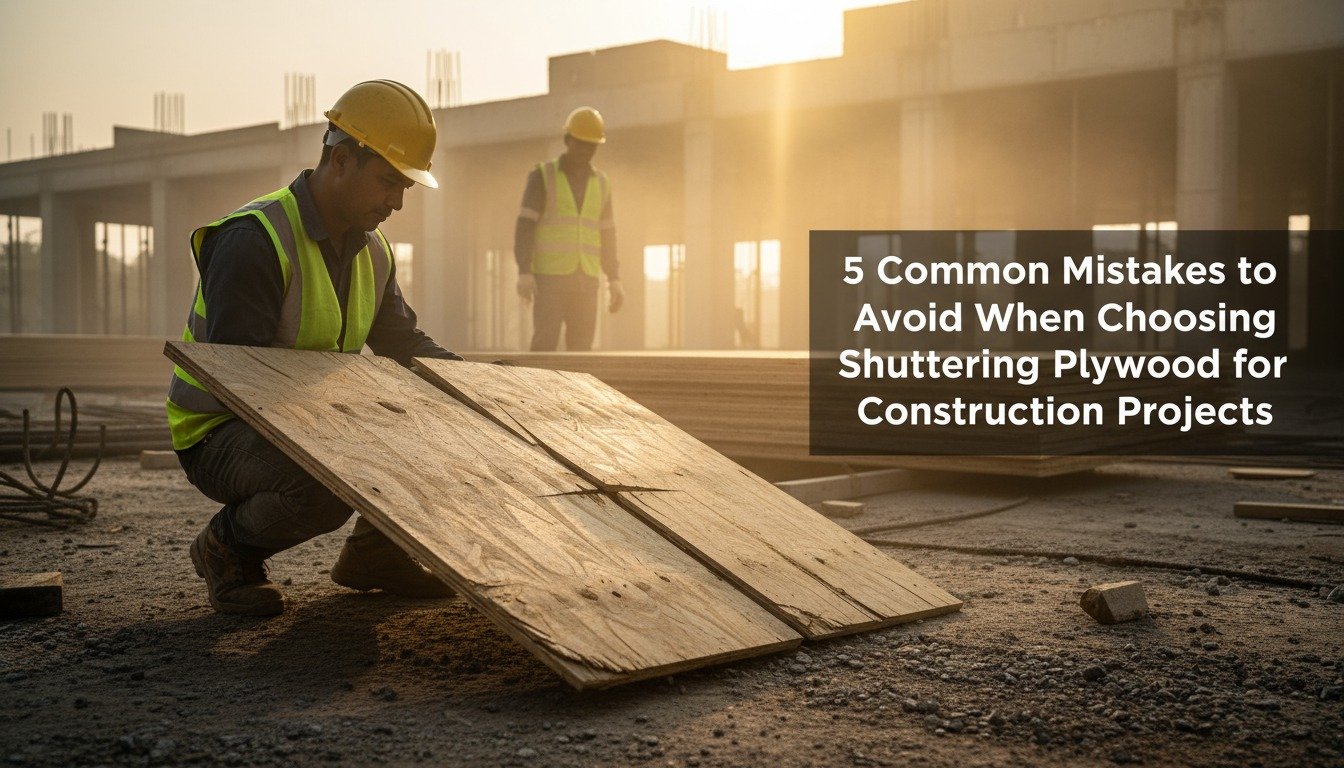
5 Common Mistakes to Avoid When Choosing Shuttering Plywood for Construction Projects

When it comes to any construction project, the success of your formwork depends heavily on the quality of the shuttering plywood you choose. A small compromise here can lead to big consequences later, leading to uneven surfaces, swelling, deformation, or even structural flaws. As someone who has spent years working closely with engineers, builders, and contractors, I’ve seen how the choice of shuttering plywood can make or break a project’s outcome.

Yet, despite its importance, shuttering plywood selection often gets overlooked or treated as a last-minute purchase decision. Here, I’ll share five common mistakes people make when choosing shuttering plywood and how avoiding them can help you ensure strength, precision, and durability in every structure you build.

Stop If You Are Making These 5 Mistakes During Construction Projects 

1. Ignoring Density and Load-Bearing Capacity

One of the biggest misconceptions in construction is that all shuttering plywood is the same. In reality, density plays a huge role in how much load the plywood can withstand. Moreover, low-density plywood may look similar at first glance, but under the pressure of wet concrete, it starts to bend, warp, or even crack.

High-density shuttering plywood, on the other hand, is built to handle heavy concrete loads without losing shape. It offers dimensional stability and ensures the smoothness of the final concrete surface. Hence, always check the density specifications before purchasing because once the formwork is up, there’s no turning back.

2. Overlooking the Quality of the Core and Veneer Bonding

Many assume that the external finish of plywood is all that matters, but what really defines its strength is what lies within. The bonding quality between the veneers and the core is critical for durability. Also, poorly bonded sheets are certainly prone to delamination, which is a condition where layers start separating due to moisture or pressure.

When evaluating plywood, check whether it’s made using phenol-formaldehyde resin, often used for waterproof bonding, and whether it has been hot-pressed under controlled conditions. These factors ensure that the plywood holds firm even when exposed to harsh site conditions or multiple reuses.

3. Choosing Based on Price Instead of Performance

It’s tempting to go for cheaper alternatives, especially when the project budget is tight. However, saving a little upfront can end up costing much more later. Low-cost plywood often lacks the structural integrity required for repeated use, which means it needs to be replaced frequently.

On the contrary, high-quality shuttering plywood may come with a slightly higher price tag, but it delivers longer service life, fewer surface defects, and better performance under stress. In short, you’re not just paying for plywood; you’re paying for reliability, consistency, and peace of mind on site.

4. Not Checking for Waterproof and Weather Resistance

Construction sites are unpredictable, wth bringing sudden rain to high humidity, your shuttering material faces it all. That’s why checking for waterproof and weather-resistant features is non-negotiable. Plywoods with a BWP (Boiling Water Proof)  or WBP (Weather and Boil Proof)  grade offer superior protection against moisture.

Additionally, if the plywood isn’t properly sealed or chemically treated, it will absorb water, swell, and eventually lose shape. This not only affects the formwork quality but also leads to project delays and additional repair costs. Hence, to avoid this, always look for plywood that has been treated for moisture resistance and designed for reuse across multiple cycles.

5. Skipping Certification and Manufacturer Reputation

The final mistake many builders make is not checking the manufacturer’s credibility. In an industry where every detail matters, certification and reputation are signs of reliability. It is important to check as certified manufacturers follow industry standards and undergo quality testing to ensure consistent output.

When sourcing plywood, always ask for IS certification, load test reports, and moisture resistance ratings. These details act as proof of authenticity and performance, helping you avoid substandard materials that can compromise the entire structure.

Choosing the Right Partner for Quality and Reliability

Selecting the right shuttering plywood is as much about choosing the right manufacturer as it is about the product itself. Reliable manufacturers invest in advanced production technology, maintain strict quality control, and use superior bonding resins to ensure that every sheet performs consistently on-site.

That’s where United Timber Works stands out. With years of expertise in crafting high-density shuttering plywood that meets demanding construction standards, the company focuses on strength, stability, and long-term durability. All the plywood is engineered to withstand repeated use, heavy concrete pressure, and challenging weather conditions, making it a trusted choice among contractors and builders who value performance over compromise.

Key Takeaways 

To sum up, the right shuttering plywood is more than just a construction material as it’s the foundation of your project’s success. By avoiding these common mistakes and prioritising density, bonding quality, weather resistance, and brand credibility, you can save time, minimise waste, and achieve a superior concrete finish.

Remember that every structure begins with a strong base, and making an informed choice today ensures that your work stands tall for years to come.

The Backbone of Strong Structures: Why High-Density Shuttering Plywood Matters in Modern Construction

Every great structure stands on a foundation of precision, planning, and the right materials. Among the many components that go into creating a durable building, shuttering plywood plays a role that’s often underappreciated yet absolutely vital. It forms the mould for concrete, literally shaping the backbone of a structure.

In modern construction, where quality, speed, and sustainability are equally important, selecting the right type of shuttering plywood can make a world of difference. Having worked closely with project engineers, site supervisors, and material experts, I’ve seen firsthand how high-density shuttering plywood has become the industry’s preferred choice for achieving structural strength and surface perfection.

Reasons Justifying the Selection of High-Density Shuttering Plywood in New-Gen Construction 

1. The Role of Shuttering Plywood in Construction

At its core, shuttering plywood acts as a temporary mould that holds concrete until it sets into its desired shape. While the formwork is temporary, the impact of the plywood used in it is lasting. It is evident that low-quality shuttering materials often result in uneven concrete finishes, structural weaknesses, or cracks that compromise both appearance and integrity.

On the other hand, high-density shuttering plywood provides a smooth, strong, and stable surface for the concrete to rest and set. The uniformity in its thickness and resistance to warping ensures that every corner and edge of the formwork retains its intended shape, leading to precision-built structures.

2. Why Density Makes All the Difference

Density is one of the defining characteristics of shuttering plywood. The denser the plywood, the higher its ability to withstand the immense pressure of wet concrete. People often end up choosing low-density boards as they appear similar at first glance, but tend to bend, delaminate, or lose shape after just a few uses. However, to experience superior load-bearing capacity and dimensional stability, selecting the high-density variant is non-negotiable. 

Because it maintains its form even under repeated concrete pours, ensuring that the structure remains consistent from one pour to the next. This not only enhances structural accuracy but also significantly reduces wastage and the cost of frequent replacements.

3. Test of Durability Under Tough Site Conditions

Indian weather can change within the wink of an eye; hence, construction sites need to be prepared for extreme conditions. This may include heavy rainfall, humidity, temperature fluctuations, and exposure to water, which are all part of the process. This is where the durability and weather resistance of high-density shuttering plywood become crucial.

Such plywood is manufactured using high-grade phenolic resins that make it both waterproof and boil-proof. This allows it to withstand repeated use and exposure without losing its strength or surface finish. Its toughness ensures smooth concrete surfaces, reduces maintenance time, and increases the number of reuses, making it an efficient and cost-effective solution for large-scale construction projects.

4. Precision and Performance in Every Pour

In modern construction, accuracy is non-negotiable, and so, architects and contractors demand exact measurements and flawless finishes. Thus, only shuttering plywood with high-density supports this demand by ensuring uniform thickness, smoothness, and strength across every sheet.

Whether it’s for residential foundations, commercial high-rises, or complex infrastructure works, consistent quality ensures there are no deformations or leaks during the pour. The result? Cleaner lines, stronger walls, and concrete surfaces that require minimal finishing work afterward.

5. Sustainability and Long-Term Value

Sustainability in construction is more than just using green materials and includes policies for maximum efficiency and reducing waste. High-density shuttering plywood contributes to this by offering extended reusability. A good-quality sheet can be reused multiple times without losing its strength, which translates to lower resource consumption and better cost-efficiency over time.

Moreover, responsible manufacturers today use wood sourced from sustainable forestry practices and invest in cleaner, eco-friendly production technologies that align with the industry’s growing commitment to sustainability.

Why Getting Plywood from a Trusted Manufacturer Changes Everything? 

The performance of shuttering plywood depends as much on how it’s made as on what it’s made from. Thus, if you choose a trusted manufacturer, you are ensuring consistent density, strong bonding, and reliable waterproofing to cover demanding construction environments.

In this case, I’ve to mention the name, United Timber Works, which stands as a name synonymous with reliability and craftsmanship. Known for producing superlative quality shuttering plywood engineered to perform under pressure. Moreover, the brand emphasises precision manufacturing, durability, and water resistance in every panel. Each sheet is rigorously tested to meet industry standards, offering builders and contractors the assurance of consistent quality across projects of any scale.

Key Takeaways 

So, when you choose a manufacturer like United Timber Works, you’re not just buying plywood; you’re investing in performance, dependability, and structural integrity, leading the way in quality manufacturing. Thus, from enabling perfect concrete finishes to ensuring safety and reusability, a manufacturer plays an indispensable role in building with confidence.